-
By EV Plug Pros
- 0 Comments
Property managers and HOA boards across Colorado are fielding more EV charging questions than they were two years ago, and that pace is not slowing down. Colorado ranked fourth in the country for new EV registrations in 2025, and the residents driving those vehicles need somewhere to charge overnight. For most of them, that means home, and for renters and condo owners, home means your property.
This is not a niche concern for high-end buildings. It is a practical question for any multifamily property in the Denver metro, the Boulder corridor, and across the Front Range, and the answers are more straightforward than most property managers expect. Colorado has active grant funding, a right-to-charge law that puts real pressure on HOAs and landlords, and installation options that range from a single outlet in an assigned parking space to a full networked charging station setup for a shared lot.
Here is what you need to know before a resident beats you to the conversation.
What Colorado’s Right-to-Charge Law Actually Requires
Colorado’s right-to-charge law limits how much a landlord or HOA can push back when a resident wants to install an EV charger in their designated parking space. The law does not give residents a blank check to do whatever they want, but it does make outright refusal difficult to defend. Under Colorado law, an HOA or landlord cannot unreasonably prohibit a resident from installing a charger at their own expense in their own assigned space.
The practical implication is that if you are not already planning for EV charging at your property, you are likely managing it reactively instead of strategically. Reactive means one resident gets an installation that does not match the setup you would have chosen, the permit is pulled by a contractor you did not vet, and you have no visibility into what is going on with your own building’s electrical infrastructure. A property-wide charging plan gives you control over the outcome, keeps installations consistent and code-compliant, and opens the door to grant funding that individual resident requests typically cannot access.
For a full overview of Colorado’s right-to-charge provisions, the U.S. Department of Energy’s Alternative Fuels Data Center maintains current state-by-state policy summaries.
What Types of EV Chargers Work Best for Multifamily Properties?
The right charger depends on your parking layout, how residents use their spaces, and what your electrical infrastructure can support. There is no single right answer, and a site assessment is the most reliable way to figure out what fits your building, but here is a practical breakdown.
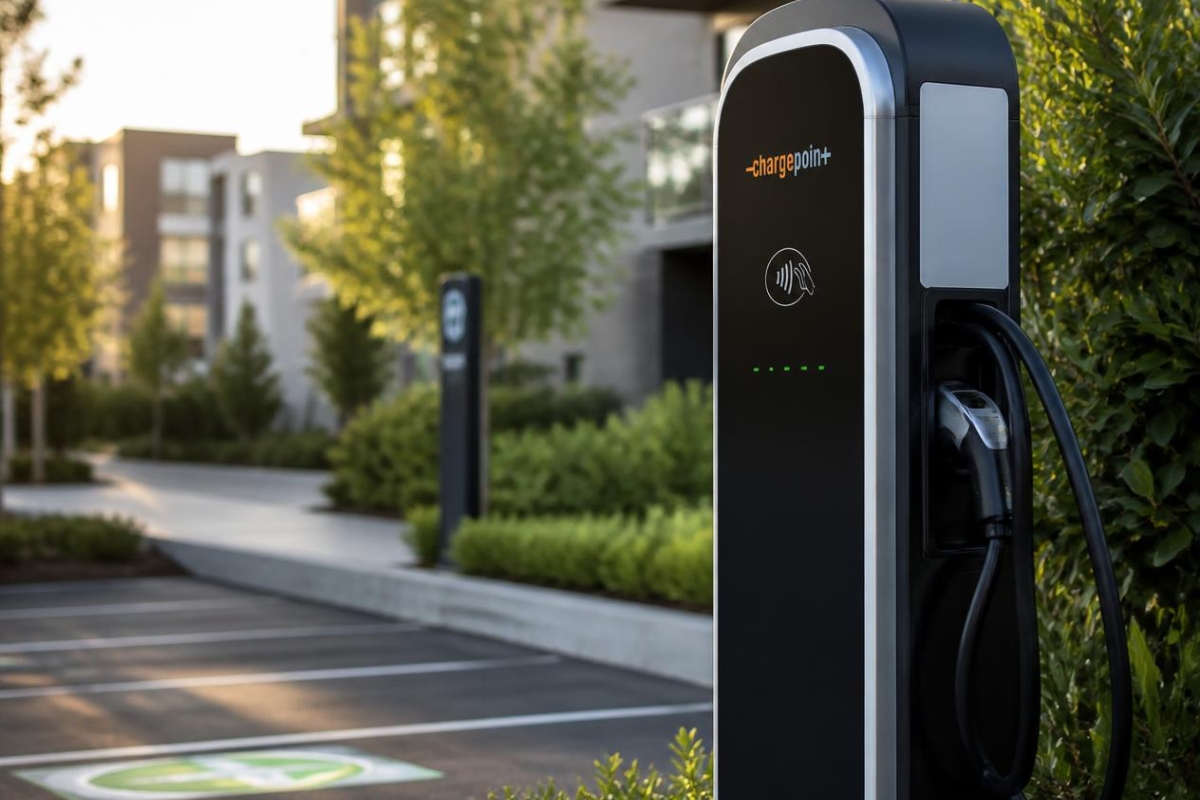
Level 2 chargers in assigned spaces are the most common setup for apartment complexes and condos with dedicated parking. A Level 2 charger delivers roughly 25 to 30 miles of range per hour of charging, which means a resident plugging in after work wakes up to a full charge. These are hardwired 240-volt units, typically installed by the parking space and billed either through the building or directly to the resident depending on how the property structures it.
High-powered outlets in assigned spaces are a newer option that Colorado’s Charge Ahead program specifically supports. Instead of a dedicated charger unit, a 240-volt outlet is installed at the parking space and the resident uses their own portable charging cable. The hardware cost is lower and the installation is simpler, which makes this a good fit for properties looking to get a lot of spaces charging-ready without a large upfront investment.
Shared Level 2 stations in common areas work well for surface lots or garage setups where residents do not have assigned spaces. A networked station with payment processing lets residents pay per session, which can offset operating costs for the property.
How to Use Colorado’s Charge Ahead Grants for Multifamily EV Charging
Charge Ahead Colorado is the state’s primary grant program for EV charging infrastructure, and multifamily properties are among the eligible applicants. The program has run multiple application rounds in 2025 and 2026, and as of May 2026, a new outlet incentive specifically covers high-powered outlets installed in assigned and deeded parking spaces, which means the installation model most accessible to apartment complexes and HOAs now has dedicated state funding behind it.
Xcel Energy also offers rebates of up to $1,250 per Level 2 port for commercial and multifamily installations, with higher amounts available for projects in disproportionately impacted communities. The Xcel EV charging rebate program is worth checking before you finalize your project budget, since the rebate can meaningfully offset installation costs.
The 30C federal tax credit covers up to 30% of commercial EV charging equipment and installation for eligible properties. A tax professional can confirm eligibility for your specific ownership structure, but it is worth factoring into the financial picture before you decide what scope of work makes sense.
For a full breakdown of current Colorado incentive programs, our Colorado EV incentives and rebates guide covers state, utility, and federal options with current amounts and eligibility requirements.
What the Installation Process Looks Like for Apartments and Condos
Every multifamily installation starts with a site assessment. That means looking at your existing electrical panel capacity, your parking layout, how many spaces you want to serve in the first phase, and whether any infrastructure work, conduit runs, or panel upgrades are needed before chargers can go in. The assessment is the step that prevents surprises later, and any contractor skipping it is not doing the job properly.
From there, the process follows the same path as any permitted electrical work in Colorado. The permit is pulled before work begins, the installation is completed, and the inspection is scheduled within one to two weeks after the work is done. In Colorado, a permit must be approved before an inspection can be scheduled, and operating without a permit affects rebate eligibility and code compliance. For properties coordinating with Charge Ahead or Xcel rebates, proper permitting documentation is required as part of the application.

Larger projects, meaning multiple buildings, a significant number of spaces, or infrastructure work across an underground garage, are typically phased to minimize disruption to parking access. EV Plug Pros plans the installation sequence around your property’s operational needs, not a schedule that works for us at the expense of yours.
For more on how the installation process works from start to finish, see our multifamily EV charging services page.
Frequently Asked Questions
Colorado law limits an HOA’s ability to unreasonably prohibit EV charger installation in a resident’s designated parking space. The HOA can establish reasonable installation standards and require the resident to cover costs, but an outright ban is difficult to enforce under current state law. A property-wide charging program is often a better path than managing individual resident requests one at a time.
It depends on how the property structures it. Some properties cover the installation cost and charge residents per session through a networked charger. Others have residents pay for installation in their own assigned space as a tenant improvement. Grant funding through Charge Ahead Colorado can offset the property’s upfront costs regardless of which model you choose.
A practical starting point for most Colorado properties is planning for 10 to 20% of total parking spaces in the first phase, with conduit roughed in for future expansion. EV adoption rates in Colorado continue to climb, and building in the infrastructure now is significantly cheaper than retrofitting later. A site assessment gives you a clearer picture of what makes sense for your specific building.
Yes. EV charger installation requires a permit in Colorado municipalities, including Denver, Golden, Lakewood, Arvada, and Boulder. The permit must be approved before an inspection can be scheduled, and installations without proper permits can affect eligibility for utility rebates and grant programs.
A small installation of two to four Level 2 stations in an existing parking structure might take a day or two. Larger projects involving panel upgrades, conduit across multiple buildings, or a significant number of spaces are typically phased over several days or weeks. EV Plug Pros provides a realistic timeline during the site assessment so your property team can plan accordingly.
The conversation about EV charging at your building is coming if it hasn’t started already, and the properties getting ahead of it are the ones positioned to use grant funding, control the installation quality, and offer a genuine amenity rather than scrambling to accommodate individual requests after the fact.
If you want to talk through what makes sense for your property, call us at (720) 900-5530 or request a free site assessment. We serve apartment communities, HOAs, and condo associations across Golden, Denver, and the Colorado Front Range.